
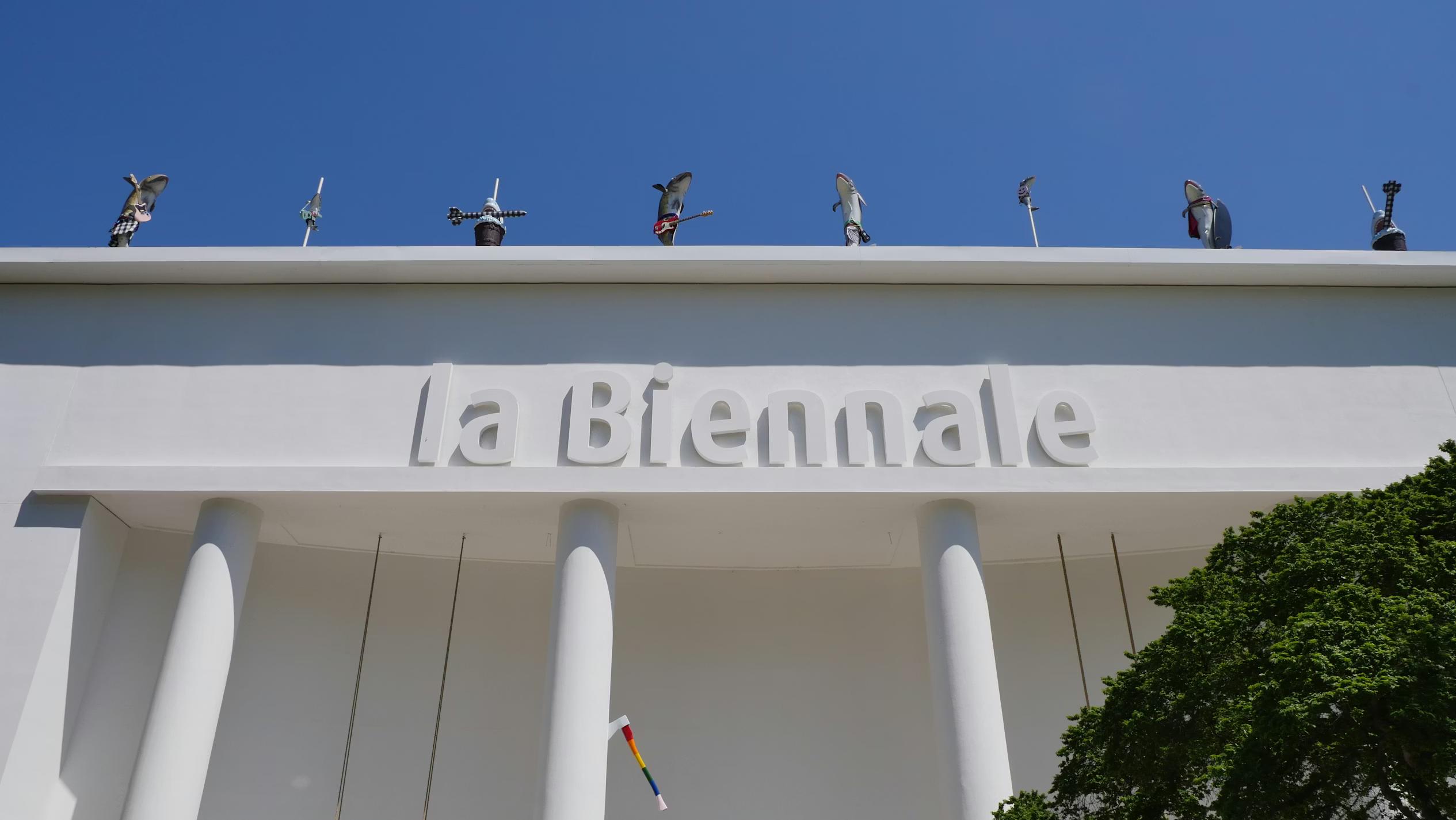
For decades, the Venice Biennale has operated under an understood fiction: that its walls are immune to commerce, a sacred space for discourse untouched by the transactional urgencies of the fair circuit. Dealers underwrote pavilions and shipped sculptures across the Adriatic while keeping their mouths shut about the deals being done at dinner. That arrangement has now collapsed — openly, and with considerable speed. The 61st International Art Exhibition, titled In Minor Keys and running from 9 May to 22 November 2026, has become the most commercially animated Biennale in living memory, reshaping what collectors should expect from their week in the lagoon.
The Fiction Falls Away
The Art Newspaper reported this week that an unprecedented number of dealers, auction houses, and private foundations are openly pricing and selling works to the crowds of collectors descending on the city — a shift that marks a clear departure from prior editions. Artnet News framed it plainly: the Biennale's "polite fiction of being 'above the market' is wearing thin."
The mechanics are not new, but the candor is. The Biennale's standing as a powerful, unofficial marketplace that drives the global contemporary art market dates back decades — but just ten years ago, dealers were reluctant to go on record about the backing they provide for shows and new commissions in Venice, let alone the sales they make. What has changed in 2026 is that the reluctance has evaporated entirely.
The Venezuelan collector Ronald Harrar, organizing an exhibition in collaboration with an artist's estate in Venice this week, offered a formulation that would have been unthinkable at prior Biennales: "We consider Venice, particularly within the framework of the Biennale, to be a uniquely effective platform where institutional discourse and market visibility converge," he said. "[Our] exhibition is conceived to operate across both registers: as a rigorous curatorial proposition grounded in archival research, and as a mechanism for renewed market engagement." That is not the language of cultural philanthropy. It is the language of a sales strategy.
Christie's Makes Its Venice Debut — With Price Tags
The most significant structural development is Christie's. For the first time, Christie's is hosting an invitation-only selling exhibition in Venice, offering Old Masters such as Lucas Cranach alongside Modern and contemporary giants like Andy Warhol, Louise Bourgeois, and Mark Bradford. Prices range from $500,000 to more than $35 million. Several works are Venice-themed, including a JMW Turner depiction of the city from 1841 and an Édouard Manet view of the Grand Canal dated 1873 — an acute piece of programming that flatters both the setting and the buyer's sense of occasion.
For Christie's, a Venice selling exhibition is not merely a gesture toward a captive collector audience. It is a test of whether the Biennale week can function as a third major selling season — supplementing the established New York spring and November cycles. A spokesperson for the auction house said its Venice calendar is packed with exclusive excursions for those in its Preferred client program, ranging from intimate tours of Laurent Asscher's AMA Foundation and the Marcantonio Brandolini Studio to private views of Marina Abramović at the Gallerie dell'Accademia and Jenny Saville at Ca' Pesaro. The client hospitality is inseparable from the commercial intent.
Sotheby's, not to be left out, is hosting its customary breakfast at the Peggy Guggenheim Collection and its traditional dinner at the Gritti Palace, supplemented by a steady stream of client lunches and cocktail hours. These are not cultural philanthropy events. They are the infrastructure of the secondary market, relocated to the lagoon.
Italy's 5% VAT: The Structural Incentive Underneath It All
Venice's commercial momentum this year has a concrete fiscal catalyst. An unprecedented number of dealers, auction houses, and private foundations are openly pricing and selling works to the crowds of collectors descending on the city, some perhaps spurred on by Italy's year-old 5% VAT rate on art imports — now Europe's lowest.
For primary-market transactions — the newly made works, the site-specific commissions, the debut prices — the impact is especially meaningful. Italian art adviser Barbara Cortina put it directly: it is here, in the primary market, that the 5% rate becomes a "real incentive." "In these cases," Cortina says, "the 5% rate can meaningfully reduce the final cost for collectors."
To understand the significance of that, consider the broader context. Add in Italy's new 5% VAT on art imports and the fact that many of the works are newly made and priced on the primary market, and Venice starts to look less like a staging ground for future deals and more like a place where the deals actually happen. Collectors who previously used Venice as a scouting trip — noting artists, vetting work, planning purchases to be closed in Basel or New York — now have a financial incentive to transact on site. The VAT differential is not a rounding error. On a €2 million primary-market sale, it can represent a saving of tens of thousands of euros compared with completing the same transaction in a higher-VAT jurisdiction.
That said, the Biennale's primary-market orientation also shapes what is available. The Italian art adviser Cortina notes that "a significant share of transactions" at the Venice Biennale "involves works from the secondary market" — but this year there is a renewed focus on contemporary art, with 90% of artists in the Biennale's main exhibition being living artists, according to research by Artnet News. For collectors focused on emerging and mid-career practices, the concentration of living artists on the walls makes Venice a uniquely relevant acquisition environment.
The Exhibition Itself: In Minor Keys, by Koyo Kouoh
Behind the market mechanics sits a curatorial vision worth taking seriously. The 61st International Art Exhibition of La Biennale di Venezia — In Minor Keys by Koyo Kouoh — runs from Saturday 9 May to Sunday 22 November 2026, at the Giardini and Arsenale venues and in various locations around Venice. Kouoh, the first African curator in the history of Biennale Arte, died in May 2025 before seeing her exhibition realized; La Biennale decided to carry out her exhibition by following the project just as she conceived and defined it, with the purpose of preserving, enhancing, and disseminating her ideas and the work she pursued.
Kouoh's framing was explicitly anti-spectacular. Her Venice Biennale 2026 is not intended to be "a litany of commentary on world events, nor an inattention or escape from compounding and continuous intersecting crises. Rather, it proposes a radical reconnection with art's natural habitat and role in society: that is the emotional, the visual, the sensory, the affective, the subjective." That philosophical orientation — quiet, affect-driven, anti-monumental — sits in deliberate tension with the sales machinery operating around it. Collectors able to hold both registers simultaneously are best placed to use the week well.
The 61st International Art Exhibition features 110 invited participants — among them individual artists, collaborative duos, collectives, and artist-led organisations — from many different geographies and regions. Seven countries are participating for the first time, including Qatar, Somalia, and Vietnam, reflecting a continued expansion of the Biennale's geographic scope that collectors tracking emerging regional markets should note.
The May New York Sales: The Second Pressure Test
Venice is only one half of the market's current stress test. The other arrives in New York over the next two weeks, where Christie's, Sotheby's, and Phillips will stage the spring marquee sales — the most consequential auction sequence since last November's blockbuster single-owner results.
Typically, these auctions occur over the course of a single week, but 2026's calendar is more fickle, owing to the Venice Biennale opening this week, followed by Frieze New York the following week. Sotheby's is looking to capitalize on the collectors in town for Frieze by holding its "Now & Contemporary Evening Auction" on May 14, the day after the fair's VIP preview. The rest of the evening sales will resume the following week, with Christie's holding its "20th Century Evening Sale" on May 18.
The lots on offer reflect a market that has absorbed last year's key lesson: provenance matters more than novelty. Christie's will offer 16 lots from the estate of S.I. Newhouse, topped by a Constantin Brâncuși sculpture, Danaïde (ca. 1913), and a Jackson Pollock painting, Number 7A (1948), estimated at $100 million each. The house is also offering three lots from the collection of former Museum of Modern Art board president Agnes Gund, the most expensive of which is a 1964 Mark Rothko work, No. 15 (Two Greens and Red Stripe), estimated at $80 million.
Sotheby's counter-programme is equally muscular. Sotheby's has its own Rothko trophy work on offer — the 1957 painting Brown and Blacks in Reds, estimated at $100 million — one of 24 works from the collection of the late dealer and financier Robert Mnuchin. At the contemporary end, Jean-Michel Basquiat's monumental 1983 painting Museum Security (Broadway Meltdown) is set for Sotheby's contemporary art evening sale on May 14, with an estimate of $45 million. That work last sold for $14.6 million at Christie's London in 2013 — making the current estimate a roughly threefold appreciation over thirteen years, a data point worth examining alongside the broader Basquiat market trajectory.
The backdrop for these sales is encouraging but not euphoric. The May auctions in New York will offer the clearest signal yet of whether 2026 is shaping up to be another year of art market growth. Last year ended strongly — major fresh-to-market consignments, including the Ronald S. Lauder and Cindy and Jay Pritzker collections, reenergized bidders and boosted supply of eight- and nine-figure lots, with H2 results jumping 54% year-on-year and boosting year-end sale totals to $3.2 billion, up 23% from 2024. But the structural dynamics remain uneven. Despite falling below their estimates on average — an indicator of softening prices — contemporary and young contemporary works made up 43% of lots offered. In 2025, 94% of auction transactions occurred below $1 million.
What Collectors Should Do Right Now
The convergence of Venice, Frieze New York, and the May sales creates a compressed, high-intensity fortnight that rewards preparation and punishes improvisation. A few practical orientations:
- Take Venice's 5% VAT seriously as a transactional moment. If you are tracking living artists with works in the collateral programming, the VAT advantage is real and time-limited. Italian import rules can change; this rate is currently Europe's lowest, and that differential will not persist indefinitely.
- Distinguish between institutional visibility and market readiness. Biennale inclusion remains a powerful validator for an artist's long-term trajectory, but works commissioned specifically for Venice — large-scale, site-specific, expensive to fabricate — may have limited secondary-market liquidity. Buy these for love and long holding periods, not for flipping.
- In the New York sales, watch the day auctions as closely as the evenings. It is the bottom quintile — works below $50,000 — that continues to show the greatest market strength. According to research by Puck, the bottom segment in the New York auctions had the highest hammer ratio of 1.57, meaning achieved hammer prices were on average 157% of estimated values. The evening fireworks are useful for sentiment-reading; the day auctions tell you where actual demand is concentrated.
- Treat the Mnuchin and Newhouse consignments as barometers, not blueprints. The trophy lots at Christie's and Sotheby's this month will generate headlines, but the Pollock, Brâncuși, and Rothko estimates reflect specific provenance premiums that do not translate into general market health. The major houses have received the message: collectors want artists with deep, stable markets and artworks with established, top-shelf provenance. Thankfully for them, works from some of the most storied collections have shaken loose. That is a supply story, not a demand revolution.
The art market in May 2026 is simultaneously more optimistic and more structurally complex than the headline numbers suggest. The market has entered 2026 optimistically, following strong autumn and winter fairs, record-breaking auction results, and broadening collecting interests that have helped stabilize sentiment. But while confidence has strengthened heading into 2026, with 43% of dealers expecting sales to improve and 38% anticipating stable performance, the gallery sector remains under genuine pressure, shipping costs are strangling margins at the lower end, and the Biennale's open commercialization, while pragmatic, also signals that even the most prestigious institutions are no longer willing to pretend the market doesn't exist. For the prepared collector, that transparency is useful. For the unprepared, it is an invitation to overpay in a beautiful city.