
Two events — separated by five weeks and several hundred miles — have collectively written the first draft of the 2026 art market's character. On the evening of 18 May, Christie's New York shattered multiple world records in under three hours. On 21 June, Art Basel closed its flagship Swiss edition having drawn visitors from 103 countries, steady sales across every booth tier, and a rare word not often heard lately: confidence. Read together, they reveal a market that has found a new equilibrium — stratospheric at the very top, cautiously active in the middle, and structurally uneven just beneath.
Christie's New York: A Night for the Record Books
The anchor of the spring season was never in doubt. Christie's sold more than $1 billion worth of art in just under three hours on the night of 18 May, setting auction records for Jackson Pollock, Constantin Brancusi, and Mark Rothko in a single session widely described as one of the house's finest evenings in its 259-year history.
The catalyst was the estate of Condé Nast owner S.I. Newhouse. The sale, titled "Masterpieces: The Private Collection of S.I. Newhouse," comprised 16 lots, all of which sold, for a total of $630,825,000 — a 100% sell-through rate and a white-glove affair. The headline result was seismic: the sale was led by two nine-figure trophies, Jackson Pollock's Number 7A (1948), which sold for $181.2 million, and Constantin Brancusi's Danaïde, which fetched $107.6 million.
For Pollock, the number requires context. Unseen publicly since 1977, the work led Christie's Newhouse sale at $181.2 million, nearly tripling Pollock's previous auction record of $61.1 million, set by Number 17 (1951) in 2021. The Pollock reset the artist's auction record and became the fourth-most-expensive painting ever sold at auction. The work started with an $82 million bid and received over 60 bids; the winning bid of $157 million ($181.2 million with fees) came after a spirited ten-minute bidding war, ultimately going to a buyer represented by Christie's global president Alex Rotter.
Provenance was central to the lot's extraordinary premium. Painted in 1948, when Pollock was 36, Number 7A marks a decisive turning point in modern art — created on the floor of his barn studio near East Hampton, the monumental canvas spanning more than 11 feet wide is both the largest Pollock drip painting and the most monumental work by the artist ever to appear at auction. Christie's claimed it as the largest drip painting still in private hands, noting its exceptional provenance, having come from the collection of the late Newhouse and his wife Victoria, who both regularly appeared on the ARTnews Top 200 collector list.
Brancusi's Danaïde — just 25 centimetres high — matched the Pollock's ambition in its own way. The Brancusi result made the Romanian modernist only the second sculptor to cross $100 million at auction, and set the second-highest price ever achieved for a sculpture. Newhouse had bought Danaïde, a bronze with a brown patina and gold leaf, for $18.2 million at Christie's in 2002. The near-sixfold appreciation over 24 years is a useful data point for collectors weighing long-term holding of Modernist sculpture.
The Newhouse evening was not an isolated triumph. The sixteen Newhouse pieces made $630.8 million in under an hour, beating the $450 million–$595 million estimate; a subsequent 20th-century sale added $490.3 million to the night's sum. Constantin Brancusi and Joan Miró also set new benchmarks that evening, while Christie's subsequent 20th-century evening sale produced records for Mark Rothko and Alice Neel through works from the collection of Agnes Gund. Rothko's No. 15 (Two Greens and Red Stripe) (1964), estimated at around $80 million, hammered at $85 million — $98.4 million after fees — and now holds the artist's new auction record.
Elsewhere in the spring week, Sotheby's Modern evening sale brought in $303.3 million, led by Henri Matisse's La Chaise lorraine (1919), which sold for $48.4 million. Phillips, meanwhile, achieved a 100 percent sell-through rate and more than doubled the total of its equivalent sale last year, setting new records for Peder Severin Krøyer, Pat Passlof, and Joseph Yaeger.
What the Numbers Actually Mean for Collectors
The results suggest renewed confidence at the top end of the market, particularly for works with exceptional provenance. But it would be a mistake to extrapolate broadly. The Newhouse sale was entirely backed by third-party guarantees — the sale was a white-glove affair and 100% sold, but it was also entirely backed by third-party guarantees, with 30 of the 47 lots in the subsequent 20th-century sale covered by house and third-party guarantees. Guarantees insulate sellers and generate headline figures, but they also compress the true price-discovery function of the auction room. For a collector using these results to benchmark a holding, the premium over estimate — not just the final hammer — is the number worth studying.
The macro backdrop reinforces caution. Last year's auction totals trailed 2021–2023 levels, and small- to mid-tier galleries offering emerging art remain vulnerable, underscored by a number of high-profile gallery closures. Buyers are deliberate when it comes to quality, provenance, and art-historical significance. Sellers still appear cautious, relying more on guarantees and private sales than in previous years. The spring sales confirmed that the top of the market is functioning, not that the whole market is healthy.
Art Basel 2026: Measured Confidence at the Messe
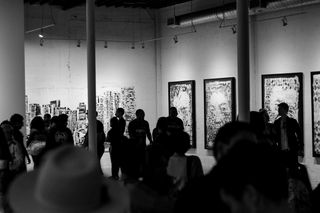
If the Christie's evening was a controlled detonation, Art Basel — which ran from 18 to 21 June with VIP preview days on 16 and 17 June — was something more deliberate. The edition was led by Director Maike Cruse and brought together 290 galleries from 43 countries and territories, with attendance reaching 90,000 visitors across the week, drawn from 103 countries. Representatives from more than 270 museums and foundations attended — a year-on-year increase that underscored Basel's role as a hub for the global institutional community.
The VIP opening day set the tone quickly. The leading transaction of the day was Hauser & Wirth's sale of Pablo Picasso's Le peintre et son modèle dans un paysage (1963) at an asking price of $35 million; the gallery said it had sold 35 works by 4 p.m. local time. By the end of the day, the mega-gallery had placed more than $65 million worth of work. Additional Hauser & Wirth sales included Cy Twombly's On Returning from Tonnicoda (1973) for $5 million, Sperlonga Drawing (1959) for $2.5 million, and Louise Bourgeois's Les Fleurs (2009) for $2.5 million.
David Zwirner told ARTnews the gallery had made a total of 57 sales by late afternoon, outperforming its previous year at the fair. In 2025, a few high-value works had driven the gallery's overall results. "This year is different because it's so broad," Zwirner explained, representing an estimated 40 artists — meaning there was broad support for many artists across the roster.
Other notable transactions confirmed demand at multiple price tiers. Chicago gallery GRAY sold David Hockney's Studio Interior #2 (2014) for $8.5 million and a 2011 iPad drawing from his "Arrival of Spring in Woldgate" series for $650,000. Sprüth Magers sold Josef Albers's Homage to the Square: Between 2 Scarlets (1962) for €2.5 million ($2.9 million) to a U.S. private collection. Yares Art sold Helen Frankenthaler's Gliding Figure (1961) for $2 million and Joan Mitchell's Untitled (1958) for $1.2 million.
At the emerging end, the Statements sector demonstrated that engaged buying extends well below the seven-figure threshold. Gypsum Gallery sold nine works by Egyptian artist Hana El-Sagini, priced between EUR 3,000–10,000, prompting the gallery to say the fair's reaction "tends to mark a turning point in an artist's trajectory." Most works by Mónica Mays at Blue Velvet's Statements booth, priced between CHF 10,000–28,000 ($12,600–$35,300), sold within the opening hours.
The K-Shape Defined — and Its Collector Implications
The dominant structural observation from both the spring sales and Basel is the persistence of what analysts are calling the K-shaped market. One art advisor at the fair observed that many works available at Basel either commanded very high prices, starting around $2 million, or were positioned at the lower end, ranging from $25,000 to $150,000. "There is more disparity in the market than in previous years. There seems to be a go-big-or-go-home attitude at the booths" — a dynamic that accurately supports the K-shaped market structure defining 2026.
The mid-market — the $150,000–$2 million range that historically sustains galleries and provides upward mobility for emerging artists — remains the most contested terrain. As advisor Benjamin Godsill put it, buyers are "feeling like it's safe to say yes to things again," though the fair was not a "feeding frenzy" like it used to be; works within the $200,000–$2 million range are selling, but carefully.
A geographic split also warrants attention. Thaddaeus Ropac noted that many of the top works in the May New York sales went to American collectors, while Art Basel was notably driven by European collectors — with Ropac's top buyers on Tuesday being European clients. Fewer international non-European art buyers are prioritising Basel, continuing a post-pandemic trend; Americans and Asians were thinner on the ground, as has been the case for the last few editions since Art Basel Paris was introduced in 2022. For American collectors, this bifurcation creates a structural arbitrage: the Basel floor, still priced partly for European appetite, may offer relative value on work that would command more competitive bidding in a New York room.
What the Season Signals for the Second Half
Two structural shifts emerging from this season deserve close attention. First, the role of single-owner collections as engines of auction momentum. The May season was buoyed by major estate sales from S.I. Newhouse, MoMA trustee Agnes Gund, dealer Marian Goodman, and financier Robert Mnuchin — delivering some of the strongest totals in recent years. Single-owner collections drove $962 million — 43% of total 2025 revenue — a 132% year-on-year increase. More such collections are expected in 2026, boosting turnover and marketing, though their rising prominence may limit broader trade activity. Collectors sitting on significant single-artist holdings should be watching this pipeline carefully; the moment when fresh-to-market estate material peaks will affect price levels across entire categories.
Second, the debut of Art Basel's new "Basel Exclusive" programme deserves monitoring as a structural shift in how fairs operate. Basel Exclusive, introduced for 2026 and developed in close collaboration with participating galleries, reserved significant works for their public unveiling at the Preview opening, generating momentum from the first hours of the fair. More than 190 galleries from the main sector took part. The programme directly counters the digital-preview dynamic that has gradually eroded the urgency of attending in person. As part of Art Basel's new Exclusive programme, galleries surprised attendees with work not included in lists sent out ahead of the fair — a scheme designed to incentivise attending in person, according to Art Basel's director. If the initiative holds — and the sell-through rate on Exclusive works suggests it will — it reinforces Basel's physical primacy at a time when the fair calendar is increasingly crowded.
The broader picture for the second half of 2026 is one of cautious optimism grounded in selectivity. Buyers are deliberate when it comes to quality, provenance, and art-historical significance. Dealers at Basel repeatedly cautioned that this was not a return to the post-Covid days of frenzied speculative buying, but rather something more measured — particularly where it concerned the big-ticket works. For collectors, that measured tone is actually an opportunity: the window between a recovering market and a fully priced one is precisely where the most durable acquisitions are made.