Biography
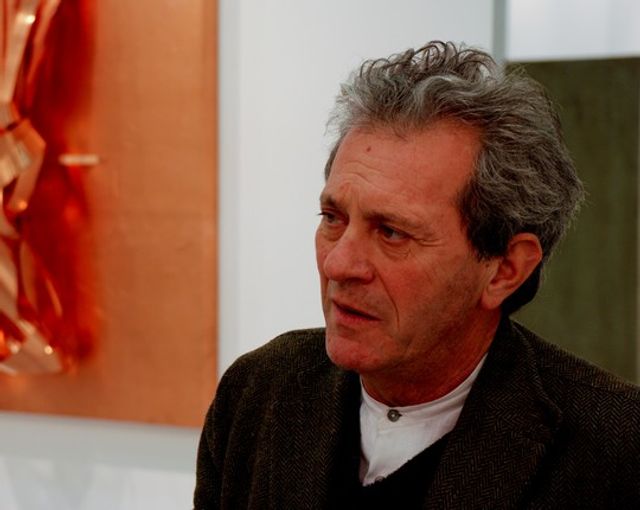
Vittorio Messina was born in Zafferana Etnea (Catania) in 1946. He completed his studies at the Academy of Fine Arts and at the Faculty of Architecture in Rome, the city where he lives and works and where, at the end of the seventies, he made his debut in the space of Sant 'Agata dei Goti - meeting point and place of experimentation of the young art of those years, with "The Great Wall of China", an exhibition organized around the homonymous Kafkaesque text. He trained at the Academy of Fine Arts and at the Faculty of Architecture in Rome, the city where he made his debut between 1978 and 1979 in the space of San'Agata dei Goti, a meeting point and place of experimentation of the young Roman art of those years. It is known above all for having dedicated itself to a genre of sculpture linked to the forms and materials of architecture, therefore called Archiscultura [1]. This type of work, dominant in the work of this artist as a whole, has manifested itself since the beginning of the eighties in a series of installations, mostly of large dimensions, in galleries and especially museums in Europe, but also in Japan [2] and in China [3]. Within this research Messina has repeatedly elaborated the iconography of the "cell", as a reference unit, synonymous with the "room", ie the basic element of architecture, and especially urban construction. In fact, Messina has often used materials and ways of consumer construction, highlighting the "abuse" that art "consumes" in relation to the degradation and environmental and social issues taking place in the metropolitan suburbs. Already with the "Muraglia" and with the exhibitions at the "La Salita" gallery in Rome (1982), and at the Locus Solus gallery in Genoa (1983), Messina's work is oriented towards a form of environmental sculpture where the use of organic and natural materials. Thus, passing through the exhibitions at the Minini gallery in Brescia (with Garutti in 1985), at the PAC in Milan, at the "Il Cangiante" exhibition curated by Corrado Levi (1986), Messina exhibits the first "cells" at the Moltkerei Werkstatt in Cologne and at the Shimada gallery in Yamaguchi (Japan), real buildings built with serial building materials, usually self-illuminated with industrial lamps. In his research, the artist has repeatedly elaborated this iconography as a reference unit, synonymous with the "room", the basic element of architecture and especially of urban construction. Since the mid-eighties Messina, using its materials and ways, has highlighted the "abuse" consummated by art in relation to the degradation and environmental and social issues taking place in the metropolitan suburbs. In 1987, at Palazzo Taverna in Rome (International Art Meetings), within a cycle where the interventions of Maria Nordman, Bruce Naumann and Luca Maria Patella followed, Messina built a "cell" and published a text, " Landscape with distant light ", where the Heisenbergian theme of uncertainty emerges, which is already present in the exhibition" Movements on the red band "of Villa Romana (Florence 1985). From this moment the work of Messina takes place with stringent visionary continuity in the large "Krater" exhibited at the "Europa Oggi" exhibition at the Pecci Museum in Prato (1988), in the total installation at the Oddi Baglioni gallery in Rome of the same year, until exhibition "Aetatis suae" at the Tucci Russo gallery in Turin (1990), where an out of sync TV screen acts as a counterpoint to a series of five large niches, which carry out the theme of nomination with a sort of "plastic writing". Subsequently, from the "cell" of the Minini gallery, Brescia (1991), to that of the Kunstverein of Kassel (1991) and the Victoria Miro gallery (London 1992), but also of the "Room for Heisenberg" (night work for Edicola Notte, Rome 1991), as in the 24 windows of the "Lux Europae" exhibition in Edinburgh (1992), up to the works of the Castle of Girifalco, Cortona (with Thomas Schütte, 1993), the work of Messina is configured, with the unpredictability and the disenchantment with a real metaphysical construction site. This idea has developed since the 1990s, in the exhibitions at the Kunstverein in Düsseldorf, at the Villa delle Rose, Bologna, in the National Galerie in Berlin, in the Museum of Erfurt, in the Museum of Leeds, up to large installations in the "Dialogues" (Maschio Angioino and Castel dell'Ovo, Naples, 2002), integrating a form of radical mobility and precariousness, to the image of the city as an improper and artificial organism. In the exhibition "A village and its surroundings" (H. Moore Foundation, Halifax 1999), some installations include the use of film-videos in the perspective of the "tableau vivant", "signaling" and "control". In "The discretion of time 1" (Ujazdovki Museum, Warsaw, 2002), and in "A visible city" (Modena, 2004), and then again in "Chronographs, or of the vertical city" (Cavallerizza Reale, Turin (2006) ), and in "Momentanea Mens", (DKM Foundation, Duisburg 2009), the space-time of the human habitat tends to expand further, up to the extreme expansion of "Hermes", a 72-hour work, divided into 9 "Chapters", born from the elaboration of a 42-minute film in 8 mm format from 1970 (Insel Hombroich, 1970/2008). Finally, in the exhibition at the Galleria Guidi in (Rome, 2011), as in the works at MACRO (“Eighties are Back”, Rome 2011) and in the exhibition with Thomas Schütte at Villa Massimo (Rome 2011), Messina strengthens the tautological component of his work and starts a new reflection on the forces and dimensions of real space. In 2013 Messina, at the Museum of the ancient Aurelian Walls in Rome, still confronts an environment strongly marked by history and events, as in the two major exhibitions of 2014, at MACRO in Rome and at the Kunsthalle in Göppingen, on the theme of "Postbabel and surroundings ", where the subject of the city re-emerges as a reflection on the origin of language and the form of art as a tension and cultural result of the human community, the same as in the" Natural Theater, Trials in Connecticut "(2016), exhibition at the "Royal Hotel of the Poor" Rice Museum of Palermo, is the absent protagonist of the new "Habitats" of Messina. Protagonists absent or forgetful, perhaps, in front of the ruins that history accumulates tirelessly in front of the astonished gaze of the Angelus Novus, in the same place where they are called for a "Convivio" at 271 Höherweg (2018), in elegant Düsseldorf, the same where Messina has set up the red-hot atmosphere of the returning, eternal "Red Shift"; and it is through the constant, radical innovation of his lexicon that the artist is specifying a discontinuous conception of space-time and, therefore, of history as an infinite and senseless accumulation of experience - of course, of individual experience -, which in art translates as a consideration for a largely inaccessible interiority, if not for generous attempts.
Track Vittorio Messina
Get notifications when works come to auction, and access market analytics
Create Free AccountAlready have an account? Sign In
Professional documentation gives you clarity, portability, and confidence in your collection.
Learn why collectors document their holdings online


Your collection, accessible anywhere
Access your collection from any device with our cloud-based platform. Native mobile apps provide seamless synchronization and offline browsing, ensuring your collection data is always at hand.


Biography
Vittorio Messina was born in Zafferana Etnea (Catania) in 1946. He completed his studies at the Academy of Fine Arts and at the Faculty of Architecture in Rome, the city where he lives and works and where, at the end of the seventies, he made his debut in the space of Sant 'Agata dei Goti - meeting point and place of experimentation of the young art of those years, with "The Great Wall of China", an exhibition organized around the homonymous Kafkaesque text. He trained at the Academy of Fine Arts and at the Faculty of Architecture in Rome, the city where he made his debut between 1978 and 1979 in the space of San'Agata dei Goti, a meeting point and place of experimentation of the young Roman art of those years. It is known above all for having dedicated itself to a genre of sculpture linked to the forms and materials of architecture, therefore called Archiscultura [1]. This type of work, dominant in the work of this artist as a whole, has manifested itself since the beginning of the eighties in a series of installations, mostly of large dimensions, in galleries and especially museums in Europe, but also in Japan [2] and in China [3]. Within this research Messina has repeatedly elaborated the iconography of the "cell", as a reference unit, synonymous with the "room", ie the basic element of architecture, and especially urban construction. In fact, Messina has often used materials and ways of consumer construction, highlighting the "abuse" that art "consumes" in relation to the degradation and environmental and social issues taking place in the metropolitan suburbs. Already with the "Muraglia" and with the exhibitions at the "La Salita" gallery in Rome (1982), and at the Locus Solus gallery in Genoa (1983), Messina's work is oriented towards a form of environmental sculpture where the use of organic and natural materials. Thus, passing through the exhibitions at the Minini gallery in Brescia (with Garutti in 1985), at the PAC in Milan, at the "Il Cangiante" exhibition curated by Corrado Levi (1986), Messina exhibits the first "cells" at the Moltkerei Werkstatt in Cologne and at the Shimada gallery in Yamaguchi (Japan), real buildings built with serial building materials, usually self-illuminated with industrial lamps. In his research, the artist has repeatedly elaborated this iconography as a reference unit, synonymous with the "room", the basic element of architecture and especially of urban construction. Since the mid-eighties Messina, using its materials and ways, has highlighted the "abuse" consummated by art in relation to the degradation and environmental and social issues taking place in the metropolitan suburbs. In 1987, at Palazzo Taverna in Rome (International Art Meetings), within a cycle where the interventions of Maria Nordman, Bruce Naumann and Luca Maria Patella followed, Messina built a "cell" and published a text, " Landscape with distant light ", where the Heisenbergian theme of uncertainty emerges, which is already present in the exhibition" Movements on the red band "of Villa Romana (Florence 1985). From this moment the work of Messina takes place with stringent visionary continuity in the large "Krater" exhibited at the "Europa Oggi" exhibition at the Pecci Museum in Prato (1988), in the total installation at the Oddi Baglioni gallery in Rome of the same year, until exhibition "Aetatis suae" at the Tucci Russo gallery in Turin (1990), where an out of sync TV screen acts as a counterpoint to a series of five large niches, which carry out the theme of nomination with a sort of "plastic writing". Subsequently, from the "cell" of the Minini gallery, Brescia (1991), to that of the Kunstverein of Kassel (1991) and the Victoria Miro gallery (London 1992), but also of the "Room for Heisenberg" (night work for Edicola Notte, Rome 1991), as in the 24 windows of the "Lux Europae" exhibition in Edinburgh (1992), up to the works of the Castle of Girifalco, Cortona (with Thomas Schütte, 1993), the work of Messina is configured, with the unpredictability and the disenchantment with a real metaphysical construction site. This idea has developed since the 1990s, in the exhibitions at the Kunstverein in Düsseldorf, at the Villa delle Rose, Bologna, in the National Galerie in Berlin, in the Museum of Erfurt, in the Museum of Leeds, up to large installations in the "Dialogues" (Maschio Angioino and Castel dell'Ovo, Naples, 2002), integrating a form of radical mobility and precariousness, to the image of the city as an improper and artificial organism. In the exhibition "A village and its surroundings" (H. Moore Foundation, Halifax 1999), some installations include the use of film-videos in the perspective of the "tableau vivant", "signaling" and "control". In "The discretion of time 1" (Ujazdovki Museum, Warsaw, 2002), and in "A visible city" (Modena, 2004), and then again in "Chronographs, or of the vertical city" (Cavallerizza Reale, Turin (2006) ), and in "Momentanea Mens", (DKM Foundation, Duisburg 2009), the space-time of the human habitat tends to expand further, up to the extreme expansion of "Hermes", a 72-hour work, divided into 9 "Chapters", born from the elaboration of a 42-minute film in 8 mm format from 1970 (Insel Hombroich, 1970/2008). Finally, in the exhibition at the Galleria Guidi in (Rome, 2011), as in the works at MACRO (“Eighties are Back”, Rome 2011) and in the exhibition with Thomas Schütte at Villa Massimo (Rome 2011), Messina strengthens the tautological component of his work and starts a new reflection on the forces and dimensions of real space. In 2013 Messina, at the Museum of the ancient Aurelian Walls in Rome, still confronts an environment strongly marked by history and events, as in the two major exhibitions of 2014, at MACRO in Rome and at the Kunsthalle in Göppingen, on the theme of "Postbabel and surroundings ", where the subject of the city re-emerges as a reflection on the origin of language and the form of art as a tension and cultural result of the human community, the same as in the" Natural Theater, Trials in Connecticut "(2016), exhibition at the "Royal Hotel of the Poor" Rice Museum of Palermo, is the absent protagonist of the new "Habitats" of Messina. Protagonists absent or forgetful, perhaps, in front of the ruins that history accumulates tirelessly in front of the astonished gaze of the Angelus Novus, in the same place where they are called for a "Convivio" at 271 Höherweg (2018), in elegant Düsseldorf, the same where Messina has set up the red-hot atmosphere of the returning, eternal "Red Shift"; and it is through the constant, radical innovation of his lexicon that the artist is specifying a discontinuous conception of space-time and, therefore, of history as an infinite and senseless accumulation of experience - of course, of individual experience -, which in art translates as a consideration for a largely inaccessible interiority, if not for generous attempts.
Track Vittorio Messina
Get notifications when works come to auction, and access market analytics
Create Free AccountAlready have an account? Sign In
Professional documentation gives you clarity, portability, and confidence in your collection.
Learn why collectors document their holdings onlineYour collection, accessible anywhere
Access your collection from any device with our cloud-based platform. Native mobile apps provide seamless synchronization and offline browsing, ensuring your collection data is always at hand.