Biography
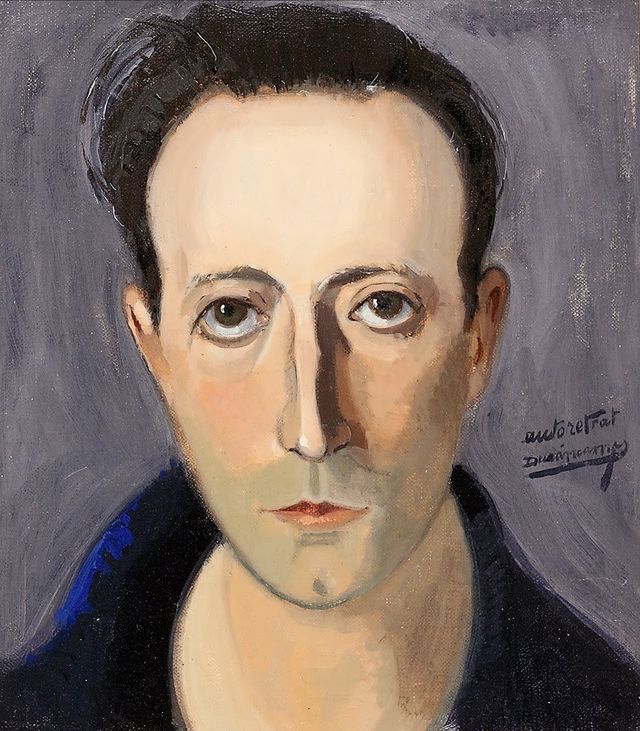
Durancamps, who was born in Sabadell and enjoyed considerable official recognition for his work, trained alongside Joan Vila Cinca, though he was influenced by Joaquim Mir, whom he knew well and to whom he was indebted for his strong sense of color. Even though he was one of the non-conformist generations of 1917, together with Rafael Benet and Emili Bosch Roger, Durancamps initially inclined towards tradition and adopted a conservative approach with a marked classical spirit in his art. In 1926, he moved to Paris, where he continued to pursue his preference for pure realism as opposed to avant-garde ideas. When the Second World War broke out, he had no option but to return to Barcelona, where he made his permanent home, though he spent time in Cadaqués, Sitges, and Gurb and maintained close contact with the art world in Madrid. During this period of his career, he showed a special liking for still lifes and themes inspired by Spanish folklore, such as bull-fighting and matadors’ cape work, village festivals, processions, hunting, etc. in rural settings. His works in this style are outstanding in their execution. Durancamps did not choose his themes on the grounds that they were typical aspects of folklore but as a representation of life. His works are also pervaded by a remarkable sense of distance, accentuated by the clayey landscapes, hills with castles on the top and broad swathes of sky and steppe, with extremely effective contrasts between the dark foregrounds and the clear patches in the distance. These pieces on nature follow the same pattern and consist of a panoramic view with the silhouette of a village against a mountain or sky, and in the foreground people busy at some task, from which the work takes its name. This oil, for example, shows the return from the hunt. According to Durancamp’s own approach, this painting must be viewed as an exercise in the contrast between light and shadows, with which he achieved the desired scenographic result. The figures are merely silhouettes rendered meaningful by a patch of color, which gives the movements a sense of force in a composition that is markedly decorative in spirit and little concerned with atmosphere or proportion.
Track Rafael Durancamps i Folguera
Get notifications when works come to auction, and access market analytics
Create Free AccountAlready have an account? Sign In
Professional documentation gives you clarity, portability, and confidence in your collection.
Learn why collectors document their holdings online


Your collection, accessible anywhere
Access your collection from any device with our cloud-based platform. Native mobile apps provide seamless synchronization and offline browsing, ensuring your collection data is always at hand.


Biography
Durancamps, who was born in Sabadell and enjoyed considerable official recognition for his work, trained alongside Joan Vila Cinca, though he was influenced by Joaquim Mir, whom he knew well and to whom he was indebted for his strong sense of color. Even though he was one of the non-conformist generations of 1917, together with Rafael Benet and Emili Bosch Roger, Durancamps initially inclined towards tradition and adopted a conservative approach with a marked classical spirit in his art. In 1926, he moved to Paris, where he continued to pursue his preference for pure realism as opposed to avant-garde ideas. When the Second World War broke out, he had no option but to return to Barcelona, where he made his permanent home, though he spent time in Cadaqués, Sitges, and Gurb and maintained close contact with the art world in Madrid. During this period of his career, he showed a special liking for still lifes and themes inspired by Spanish folklore, such as bull-fighting and matadors’ cape work, village festivals, processions, hunting, etc. in rural settings. His works in this style are outstanding in their execution. Durancamps did not choose his themes on the grounds that they were typical aspects of folklore but as a representation of life. His works are also pervaded by a remarkable sense of distance, accentuated by the clayey landscapes, hills with castles on the top and broad swathes of sky and steppe, with extremely effective contrasts between the dark foregrounds and the clear patches in the distance. These pieces on nature follow the same pattern and consist of a panoramic view with the silhouette of a village against a mountain or sky, and in the foreground people busy at some task, from which the work takes its name. This oil, for example, shows the return from the hunt. According to Durancamp’s own approach, this painting must be viewed as an exercise in the contrast between light and shadows, with which he achieved the desired scenographic result. The figures are merely silhouettes rendered meaningful by a patch of color, which gives the movements a sense of force in a composition that is markedly decorative in spirit and little concerned with atmosphere or proportion.
Track Rafael Durancamps i Folguera
Get notifications when works come to auction, and access market analytics
Create Free AccountAlready have an account? Sign In
Professional documentation gives you clarity, portability, and confidence in your collection.
Learn why collectors document their holdings onlineYour collection, accessible anywhere
Access your collection from any device with our cloud-based platform. Native mobile apps provide seamless synchronization and offline browsing, ensuring your collection data is always at hand.