Biography
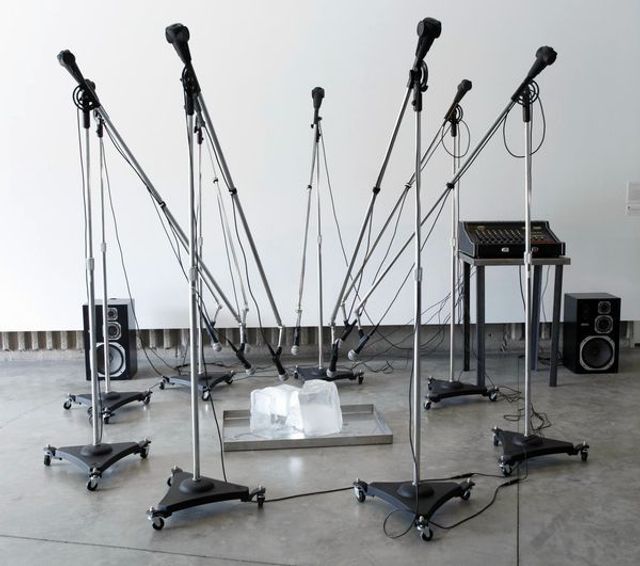
Paul Kos was born in Rock Springs, Wyoming, in 1942. He received a BFA (1965) and an MFA (1967), both in painting, from the San Francisco Art Institute. From the late 1960s to the 1970s, Kos was a leading figure of the early Bay Area Conceptual art movement, which experimented with performance, new media, and installation, emphasizing ideas over form and employing a minimal aesthetic. He helped define a West Coast approach to form that privileged the use of materials to examine perception, social relations, and daily life. Like many Bay Area artists, Kos was influenced by the tide of interest in Buddhist culture prevalent within Northern California. Kos’s early works explore the synchronous relationship among materials, events, and active viewer participation. Lot’s Wife (1969) marked an important shift in his practice, from working with toxic materials, including fiberglass, resin, and automotive wax, to using natural materials. For this work, referencing the biblical story of Lot, whose wife looks back at Sodom and Gomorrah and turns to salt, drilled salt blocks were stacked on a pole, which local cattle proceeded to lick away. This work initiated Kos’s site-specific approach and the incorporation of indigenous materials with an emphasis on the presence of nature. For Sound of Ice Melting (1970), Kos installed eight boom microphones, hooked up to amplifiers and speakers, to record the sound of two 25-pound blocks of ice melting in real time. Such works were inspired by an interest in probing the action and visceral qualities of natural materials, typical of Bay Area Conceptual art. Environmental art and Arte Povera influenced such works as Sand Piece (1971), which transformed a two-story gallery into an hourglass, as sand sifted slowly through a hole in the upper floor to form a cone on the floor below. Looking toward experimental video, Kos was among the first wave of artists to work sound, video, and interactivity into sculptural installations. Chartres Bleu (1983–86), one of his best-known works, re-creates to scale a stained-glass window from Chartres Cathedral using 27 vertically stacked video monitors, each duplicating an individual glass panel of the original. Merging form and content with social concerns, many of Kos’s later works question conflicts born from national divisions and subtly advocate for cross-cultural human understanding. In Tower of Babel (1989), 20 video monitors, each showing a person speaking a different language, are installed on a spiral ramp. The sound is cacophonic and indeterminable from afar; viewers can only decipher what is being said once they closely approach a monitor. Combining his lifelong interests in the natural landscape and humanitarian matters, Kos has participated in a number of material-based conceptual and participatory public art projects. Kos is the recipient of numerous awards, including the National Endowment for the Arts fellowship in the visual arts (1974, 1976, 1982, 1993); National Endowment for the Arts Media Arts Grant (1986); Louis Comfort Tiffany Foundation Fellowship (1985); and Flintridge Foundation Fellowship award (1999). His work has been installed in multiple solo presentations, including those at the San Francisco Museum of Modern Art (1987); Walker Art Center, Minneapolis (1987); Berkeley Art Museum, University of California (2003); and Museum of Contemporary Art San Diego (MCASD) (2003). His work has been shown in group exhibitions at a range of international institutions: Palais des beaux-arts, Charleroi, Belgium (1983); MCASD (1996); Museum of Modern Art, New York (1984, 1985, 1997); Museum of Contemporary Art, Taipei (2001); and Getty Research Institute and J. Paul Getty Museum, Los Angeles (2008). Kos lives and works in San Francisco.
Track Paul Kos
Get notifications when works come to auction, and access market analytics
Create Free AccountAlready have an account? Sign In
Professional documentation gives you clarity, portability, and confidence in your collection.
Learn why collectors document their holdings online


Your collection, accessible anywhere
Access your collection from any device with our cloud-based platform. Native mobile apps provide seamless synchronization and offline browsing, ensuring your collection data is always at hand.


Biography
Paul Kos was born in Rock Springs, Wyoming, in 1942. He received a BFA (1965) and an MFA (1967), both in painting, from the San Francisco Art Institute. From the late 1960s to the 1970s, Kos was a leading figure of the early Bay Area Conceptual art movement, which experimented with performance, new media, and installation, emphasizing ideas over form and employing a minimal aesthetic. He helped define a West Coast approach to form that privileged the use of materials to examine perception, social relations, and daily life. Like many Bay Area artists, Kos was influenced by the tide of interest in Buddhist culture prevalent within Northern California. Kos’s early works explore the synchronous relationship among materials, events, and active viewer participation. Lot’s Wife (1969) marked an important shift in his practice, from working with toxic materials, including fiberglass, resin, and automotive wax, to using natural materials. For this work, referencing the biblical story of Lot, whose wife looks back at Sodom and Gomorrah and turns to salt, drilled salt blocks were stacked on a pole, which local cattle proceeded to lick away. This work initiated Kos’s site-specific approach and the incorporation of indigenous materials with an emphasis on the presence of nature. For Sound of Ice Melting (1970), Kos installed eight boom microphones, hooked up to amplifiers and speakers, to record the sound of two 25-pound blocks of ice melting in real time. Such works were inspired by an interest in probing the action and visceral qualities of natural materials, typical of Bay Area Conceptual art. Environmental art and Arte Povera influenced such works as Sand Piece (1971), which transformed a two-story gallery into an hourglass, as sand sifted slowly through a hole in the upper floor to form a cone on the floor below. Looking toward experimental video, Kos was among the first wave of artists to work sound, video, and interactivity into sculptural installations. Chartres Bleu (1983–86), one of his best-known works, re-creates to scale a stained-glass window from Chartres Cathedral using 27 vertically stacked video monitors, each duplicating an individual glass panel of the original. Merging form and content with social concerns, many of Kos’s later works question conflicts born from national divisions and subtly advocate for cross-cultural human understanding. In Tower of Babel (1989), 20 video monitors, each showing a person speaking a different language, are installed on a spiral ramp. The sound is cacophonic and indeterminable from afar; viewers can only decipher what is being said once they closely approach a monitor. Combining his lifelong interests in the natural landscape and humanitarian matters, Kos has participated in a number of material-based conceptual and participatory public art projects. Kos is the recipient of numerous awards, including the National Endowment for the Arts fellowship in the visual arts (1974, 1976, 1982, 1993); National Endowment for the Arts Media Arts Grant (1986); Louis Comfort Tiffany Foundation Fellowship (1985); and Flintridge Foundation Fellowship award (1999). His work has been installed in multiple solo presentations, including those at the San Francisco Museum of Modern Art (1987); Walker Art Center, Minneapolis (1987); Berkeley Art Museum, University of California (2003); and Museum of Contemporary Art San Diego (MCASD) (2003). His work has been shown in group exhibitions at a range of international institutions: Palais des beaux-arts, Charleroi, Belgium (1983); MCASD (1996); Museum of Modern Art, New York (1984, 1985, 1997); Museum of Contemporary Art, Taipei (2001); and Getty Research Institute and J. Paul Getty Museum, Los Angeles (2008). Kos lives and works in San Francisco.
Track Paul Kos
Get notifications when works come to auction, and access market analytics
Create Free AccountAlready have an account? Sign In
Professional documentation gives you clarity, portability, and confidence in your collection.
Learn why collectors document their holdings onlineYour collection, accessible anywhere
Access your collection from any device with our cloud-based platform. Native mobile apps provide seamless synchronization and offline browsing, ensuring your collection data is always at hand.