Biography
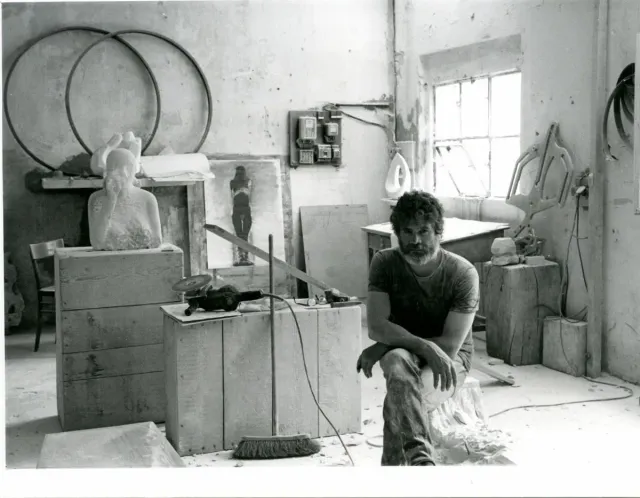
Born in Sanger, California, Manuel Neri spent most of his childhood in the San Joaquin and San Fernando valleys, where his parents worked as farm laborers. He grew interested in ceramics through a course at San Francisco City College, where he met ceramist Peter Voulkos. After serving two years in the Army, Neri returned to the Bay Area, where he abandoned ceramics in favor of plaster. He felt that clay was too limiting, whereas plaster was “a mere blob,” allowing him to work quickly and spontaneously (ARTnews, Jan. 1981). Although art after the war was dominated by abstract expressionism, Neri swam against the stream and focused on human forms and gestures. He considers the human figure a “blank canvas” through which he can express different ideas (Corcoran Day & Night, March/April 1997). Starting with a plaster mold of a model, Neri chips away at the surface and hacks at the limbs. He then paints the figures with expressionistic brushstrokes of color, explaining that the ancient Greeks painted their sculptures too.
Track Manuel Neri
Get notifications when works come to auction, and access market analytics
Create Free AccountAlready have an account? Sign In
Professional documentation gives you clarity, portability, and confidence in your collection.
Learn why collectors document their holdings online


Your collection, accessible anywhere
Access your collection from any device with our cloud-based platform. Native mobile apps provide seamless synchronization and offline browsing, ensuring your collection data is always at hand.


Biography
Born in Sanger, California, Manuel Neri spent most of his childhood in the San Joaquin and San Fernando valleys, where his parents worked as farm laborers. He grew interested in ceramics through a course at San Francisco City College, where he met ceramist Peter Voulkos. After serving two years in the Army, Neri returned to the Bay Area, where he abandoned ceramics in favor of plaster. He felt that clay was too limiting, whereas plaster was “a mere blob,” allowing him to work quickly and spontaneously (ARTnews, Jan. 1981). Although art after the war was dominated by abstract expressionism, Neri swam against the stream and focused on human forms and gestures. He considers the human figure a “blank canvas” through which he can express different ideas (Corcoran Day & Night, March/April 1997). Starting with a plaster mold of a model, Neri chips away at the surface and hacks at the limbs. He then paints the figures with expressionistic brushstrokes of color, explaining that the ancient Greeks painted their sculptures too.
Track Manuel Neri
Get notifications when works come to auction, and access market analytics
Create Free AccountAlready have an account? Sign In
Professional documentation gives you clarity, portability, and confidence in your collection.
Learn why collectors document their holdings onlineYour collection, accessible anywhere
Access your collection from any device with our cloud-based platform. Native mobile apps provide seamless synchronization and offline browsing, ensuring your collection data is always at hand.