Jean-Luc Favero
Biography
I HAVE ALWAYS DRAWN, AS FAR AS I REMEMBER, I HAVE NEVER BEEN ABLE TO DO SOMETHING ELSE. He was a handful, a compulsive child. Jean-Luc Favéro grew up in an environment where arts was far away from his daily reality. We sat him down at a table with a sheet of paper and pencils, the only way to keep him quiet, to calm his obsessions. At the end of chaotic school years, he stopped in the Year 10 without any qualifications, but still succeeds to join the School of Fine Arts of Toulouse, in the south of France. He is only 17 years old. He happily discovers a world full of incongruities, a totally new and exotic world to him: the world of arts. Young teachers introduce him to conceptual art, the art of ideas; others, of the old-fashioned, train him to a more classical art. Delighted by both teaching styles, he learns how to use tools and tirelessly draws. Immersed in this atmosphere he had been dreaming of, he fully enjoys the whole curriculum. Nonetheless, the day of the final examination, absorbed by the mural he is undertaking, he does not sit and leave the fine arts without any diplomas. I AM MUCH MORE A BOXER THAN AN ARTIST. He then settles down for 5 years in a huge depot in the countryside with other artists. Living surrounding by nature helps him consider the porous world, to penetrate it slowly. Thanks to this wonderful workshop emulation, he keeps learning and gains a professional rhythm. However, facing up the harsh reality, he organises his work in two parts to meet his family’s needs: on the one hand, he works for a living, and on the other hand, for personal investigation. He draws the outlines of this new organisation confronting himself to artists he admires and initiates with them some sort of plastic dialogue. IF I MAKE LARGE FORMATS, THIS HAS NOTHING TO DO WITH MEGALOMANIA, IT IS SIMPLY TO GET BACK TO CHILDHOOD. Evicted with his colleagues from the depot, he is lucky enough to find a old farm located on a hill nearby Rabastens, a place he still lives in nowadays. More stable, more relaxed, he starts sculpting, the physical aspect of this art fitting best his “boxer” temperament. Out of money, convinced his artistic fate is linked to large formats, he makes up his own base material: sheet metal drums he cuts out, hammers, assembles, chisels, making that way artistic works for as little as possible. A vast territory eventually opens up to him and, following the simple sentence “do what you love”, he gradually controls the anxiety to get confused. He undertakes to explore this idea, simultaneously on a physical, moral and spiritual perspectives, connecting them all together. In his intimate obsession for rituals, each sculpture requires a specified number of hammer blows. He already knows which one will be the last, a way of channelling and giving form to his distress and energy, and consequently a way of letting off steam, exhausting himself physically, and thus feeling better. THE LANDSCAPE IS NOT WIDE, THE LOOK UPON IT SHOULD BE. One day, reading an article about Celtic archaeology, the picture of an item and its corresponding legend “Celtic sword pommel on a wooden core” provokes him a poetic stimulus. The artistic work, the decoration and the enveloping of a lost wooden core, simultaneously bring him to mind the sword, a warrior, his hand, material and volumes acting as sources of life, of experiences, tending towards a desire. This artistic work wasn’t in three dimensions any more, but connected to any imaginable dimensions. He then orientates his work towards this idea of contained soul, and through a knock-on effect, of container, sarcophagus, vessel and vehicle. He produces containers, types of metal skins covering a soul, a mind. Drawing his inspiration from what directly surrounds him, he endeavours to consider each component of life, to gaze on everything with love. Containers help to tell stories deeply touching him, particularly the one about the man and the woman, about their meeting or about their relationship to the world...
Track Jean-Luc Favero
Get notifications when works come to auction, and access market analytics
Create Free AccountAlready have an account? Sign In
Professional documentation gives you clarity, portability, and confidence in your collection.
Learn why collectors document their holdings online


Your collection, accessible anywhere
Access your collection from any device with our cloud-based platform. Native mobile apps provide seamless synchronization and offline browsing, ensuring your collection data is always at hand.


Jean-Luc Favero
Biography
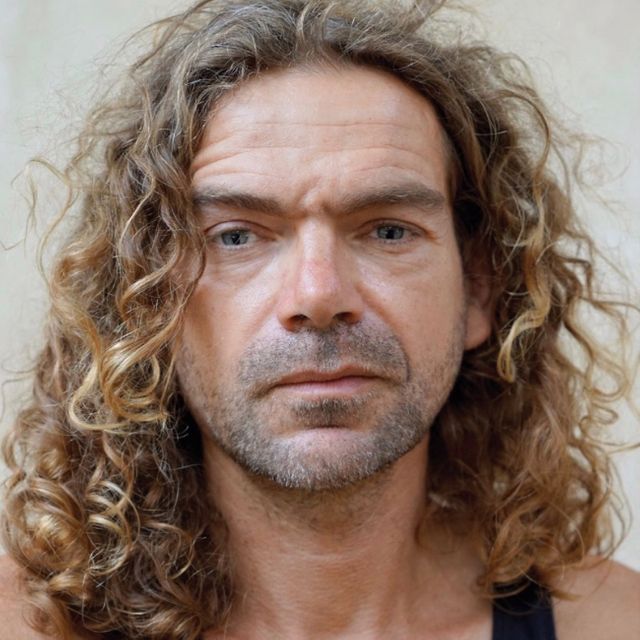
I HAVE ALWAYS DRAWN, AS FAR AS I REMEMBER, I HAVE NEVER BEEN ABLE TO DO SOMETHING ELSE. He was a handful, a compulsive child. Jean-Luc Favéro grew up in an environment where arts was far away from his daily reality. We sat him down at a table with a sheet of paper and pencils, the only way to keep him quiet, to calm his obsessions. At the end of chaotic school years, he stopped in the Year 10 without any qualifications, but still succeeds to join the School of Fine Arts of Toulouse, in the south of France. He is only 17 years old. He happily discovers a world full of incongruities, a totally new and exotic world to him: the world of arts. Young teachers introduce him to conceptual art, the art of ideas; others, of the old-fashioned, train him to a more classical art. Delighted by both teaching styles, he learns how to use tools and tirelessly draws. Immersed in this atmosphere he had been dreaming of, he fully enjoys the whole curriculum. Nonetheless, the day of the final examination, absorbed by the mural he is undertaking, he does not sit and leave the fine arts without any diplomas. I AM MUCH MORE A BOXER THAN AN ARTIST. He then settles down for 5 years in a huge depot in the countryside with other artists. Living surrounding by nature helps him consider the porous world, to penetrate it slowly. Thanks to this wonderful workshop emulation, he keeps learning and gains a professional rhythm. However, facing up the harsh reality, he organises his work in two parts to meet his family’s needs: on the one hand, he works for a living, and on the other hand, for personal investigation. He draws the outlines of this new organisation confronting himself to artists he admires and initiates with them some sort of plastic dialogue. IF I MAKE LARGE FORMATS, THIS HAS NOTHING TO DO WITH MEGALOMANIA, IT IS SIMPLY TO GET BACK TO CHILDHOOD. Evicted with his colleagues from the depot, he is lucky enough to find a old farm located on a hill nearby Rabastens, a place he still lives in nowadays. More stable, more relaxed, he starts sculpting, the physical aspect of this art fitting best his “boxer” temperament. Out of money, convinced his artistic fate is linked to large formats, he makes up his own base material: sheet metal drums he cuts out, hammers, assembles, chisels, making that way artistic works for as little as possible. A vast territory eventually opens up to him and, following the simple sentence “do what you love”, he gradually controls the anxiety to get confused. He undertakes to explore this idea, simultaneously on a physical, moral and spiritual perspectives, connecting them all together. In his intimate obsession for rituals, each sculpture requires a specified number of hammer blows. He already knows which one will be the last, a way of channelling and giving form to his distress and energy, and consequently a way of letting off steam, exhausting himself physically, and thus feeling better. THE LANDSCAPE IS NOT WIDE, THE LOOK UPON IT SHOULD BE. One day, reading an article about Celtic archaeology, the picture of an item and its corresponding legend “Celtic sword pommel on a wooden core” provokes him a poetic stimulus. The artistic work, the decoration and the enveloping of a lost wooden core, simultaneously bring him to mind the sword, a warrior, his hand, material and volumes acting as sources of life, of experiences, tending towards a desire. This artistic work wasn’t in three dimensions any more, but connected to any imaginable dimensions. He then orientates his work towards this idea of contained soul, and through a knock-on effect, of container, sarcophagus, vessel and vehicle. He produces containers, types of metal skins covering a soul, a mind. Drawing his inspiration from what directly surrounds him, he endeavours to consider each component of life, to gaze on everything with love. Containers help to tell stories deeply touching him, particularly the one about the man and the woman, about their meeting or about their relationship to the world...
Track Jean-Luc Favero
Get notifications when works come to auction, and access market analytics
Create Free AccountAlready have an account? Sign In
Professional documentation gives you clarity, portability, and confidence in your collection.
Learn why collectors document their holdings onlineYour collection, accessible anywhere
Access your collection from any device with our cloud-based platform. Native mobile apps provide seamless synchronization and offline browsing, ensuring your collection data is always at hand.