Biography
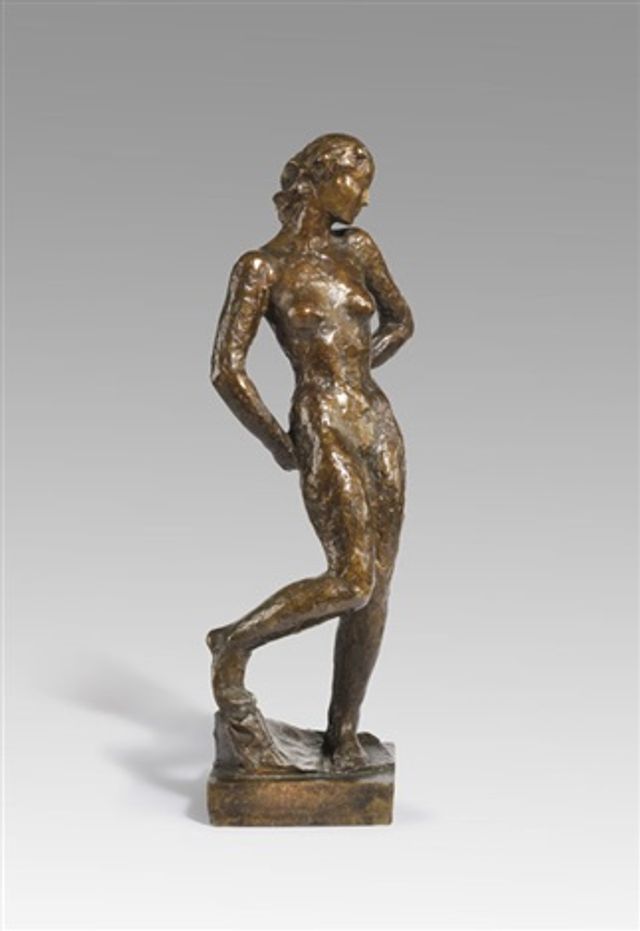
Georg Kolbe was a German artist best known for his stylized figurative bronze sculptures. A key player in both the 1905 Berliner Sezession and the Freie Sezession in 1913, Kolbe also produced a series of lithographs, drawings, and small sculptures in his lifetime in tandem with his signature life-size bronzes, the most recognizable of which is 1912's Die Tänzerin. Controversially, Kolbe's youthful, athletic figures made him a favorite of Hitler's during World War II: His sculptures were lauded by the Nazi party, culminating in his placement on the Gottbegnadeten list, which sought to highlight the country's “twelve most important visual artists” that aligned with Aryan ideals. Born on April 15, 1877 in Waldheim, Saxony, Kolbe studied painting across cultural centers in Europe, including Paris, Munich, and Rome, where he was prompted to begin sculpting under the tutelage of Prussian classicist Louis Tuaillon. Kolbe died on November 20, 1947 in Berlin, Germany, and despite many of his works being destroyed during the war, maintains a presence among the collections of many important cultural institutions, including The Museum of Modern Art in New York and the Moderna Museet in Stockholm, Sweden.


Artist Alerts
Track Georg Kolbe
Get notifications when works come to auction, and access market analytics.